
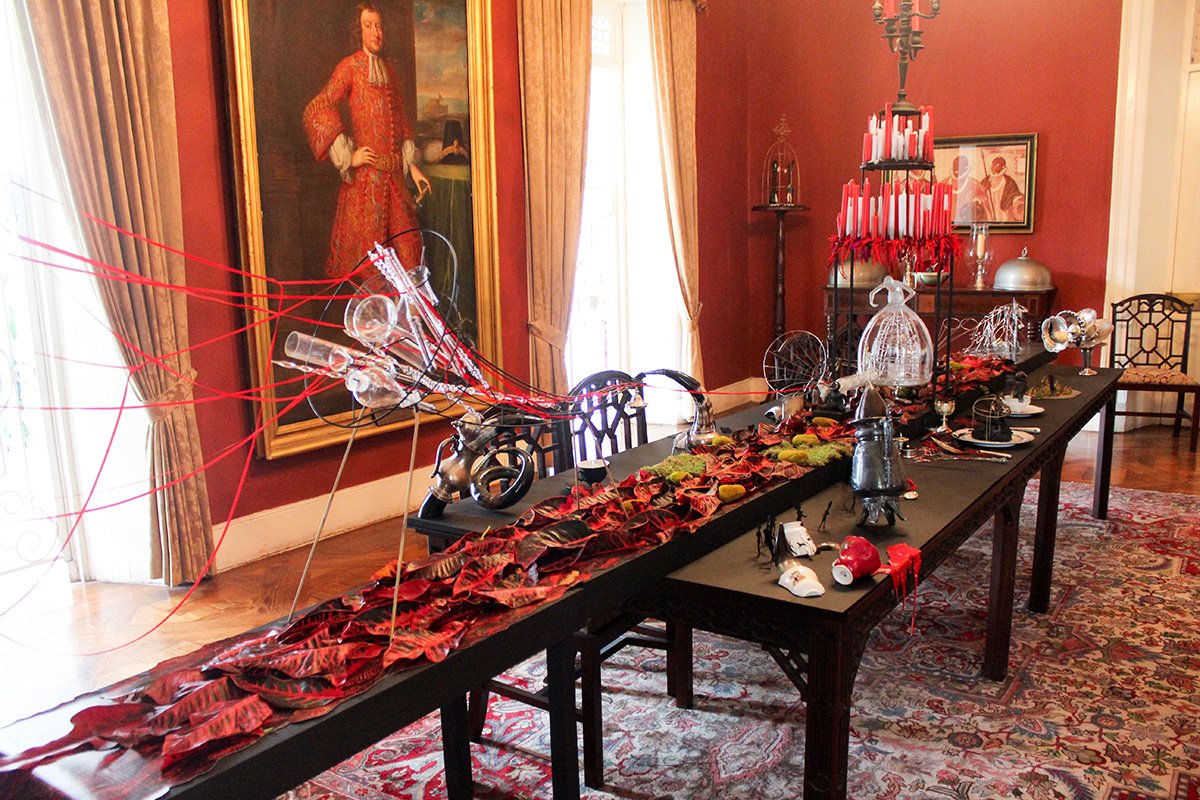
The Table
In this series of installations, Thomas-Girvan invites the viewer to the table. At each setting, we enter a space of introspection and reflection — the table becomes a lens through which to consider the social, historical, and cultural realities of slavery, where culture and refinement coexisted with plunder, violence, and genocide.
Presented at four sites, the work shifts in form in response to each context while maintaining its core concerns. Each iteration reflects on place, history, and power — a meditation on memory, displacement, and the enduring legacies of colonialism. The table is set with finery: crystal, silverware, and china, the decadence of Empire underwritten by the plantation economy of the Caribbean.
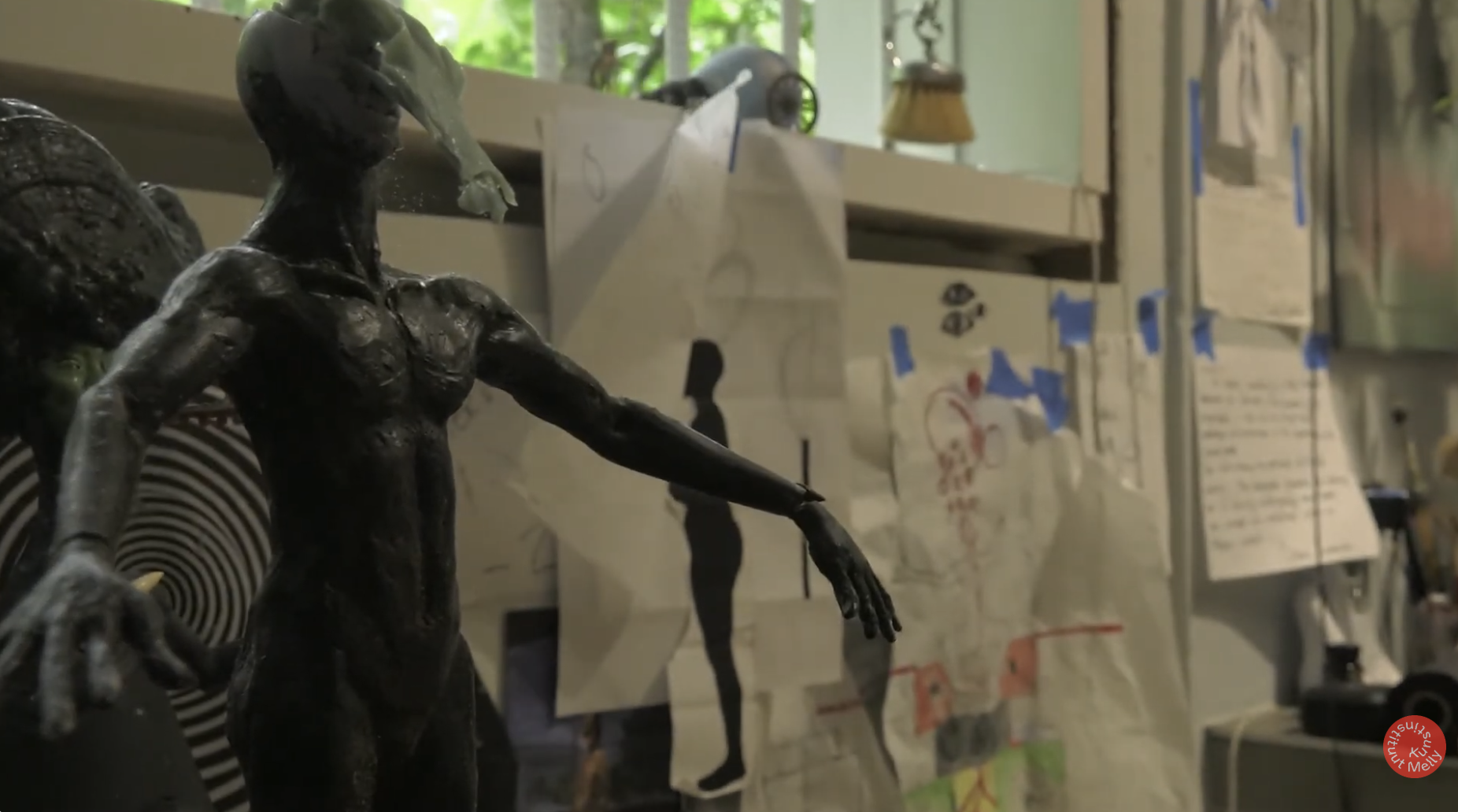
Jasmine Thomas-Girvan: Bathed in Sacred Fire.
Produced on occasion of the artist’s exhibition at Kunstinstituut Melly.
Materials: Silverware, glass, bronze, paper, faux leaves, porcelain, antique lacework, ceramics, ribbon, wood, plexiglass, and machete. Variable dimensions.
Scroll to explore the work across its different installations: Rotterdam, Port of Spain, Kingston, and London.
Kunstinstituut Melly, Rotterdam (2021)
This iteration references the 1885 Berlin Conference, where fourteen European nations claimed control over the African continent without a single African present. Borders were drawn for the convenience of Empire, fragmenting communities and reshaping the continent with lasting consequences. The table is set with fourteen place settings — marking that moment of exclusion and dispossession. Here, the table becomes a charged symbol of power and absence, foregrounding the structures through which colonial authority was enacted and continues to reverberate.
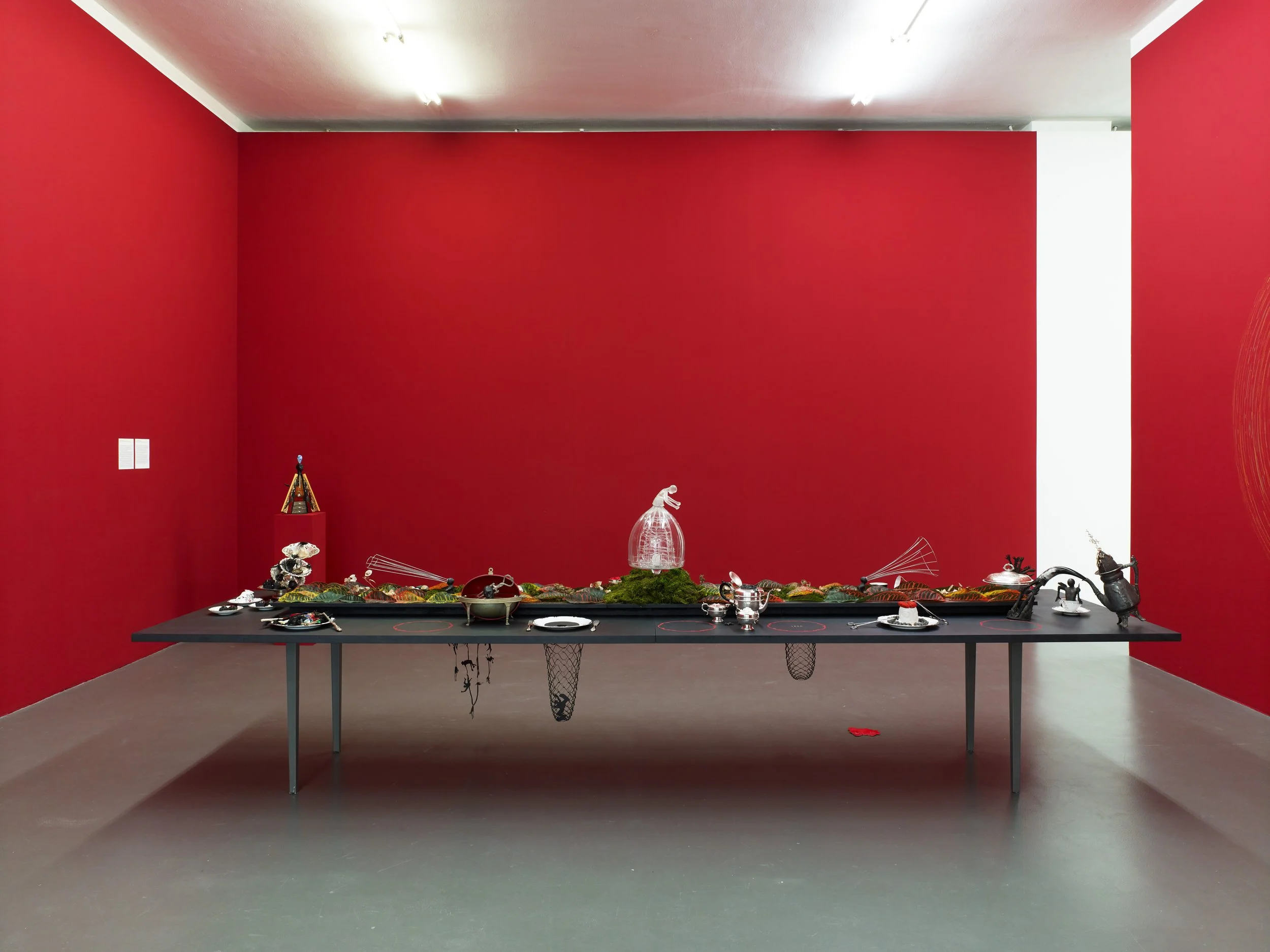
Detail showing The Sunken Place, which reflects on the continued surveillance and violence enacted on Black bodies, invoking a suspended, otherworldly space shaped by histories of slavery, incarceration, and silencing, while also suggesting the possibility of psychic survival and transformation.
Detail showing the glass sculpture, Looking Within.
Y Art Gallery (2016)
First presented in a white cube gallery context, this iteration established the work's conceptual throughlines. Intersecting table forms juxtapose the indigenous world of nature at the centre against the Empire at its flanks — with all its assumptions of beauty and civilised behaviour. The table is both structure and symbol: an entry point into the layered histories of slavery and colonialism, where acts of gathering and display are inseparable from systems of power and control.
Kingston Biennial, Devon House, Jamaica (2017)
Parallel Realities: Dwelling in the Heartland of My People
Installed within historic Devon House, the work engages directly with the site's colonial legacy and its associations with wealth, land, ownership, and the brutalities of slavery. Situated within a charged architectural and cultural space, this iteration intensifies the work's reflection on place, memory, and the structures of power embedded in the Jamaican landscape.
David Zwirner, England (2019)
Presented in Europe for the first time, this pared-down circular configuration re-situates the work within a different geographic and institutional context. More graphic in presentation, more intimate in scale — yet the central concerns hold: how histories of empire and displacement are carried across contexts, and how they continue to shape contemporary Black experience.